Elena Jung · 20 October 2026
Marine Biologists Investigate How Persistent Coastal Fog Influences Bioluminescent Organisms in Shallow Port Waters
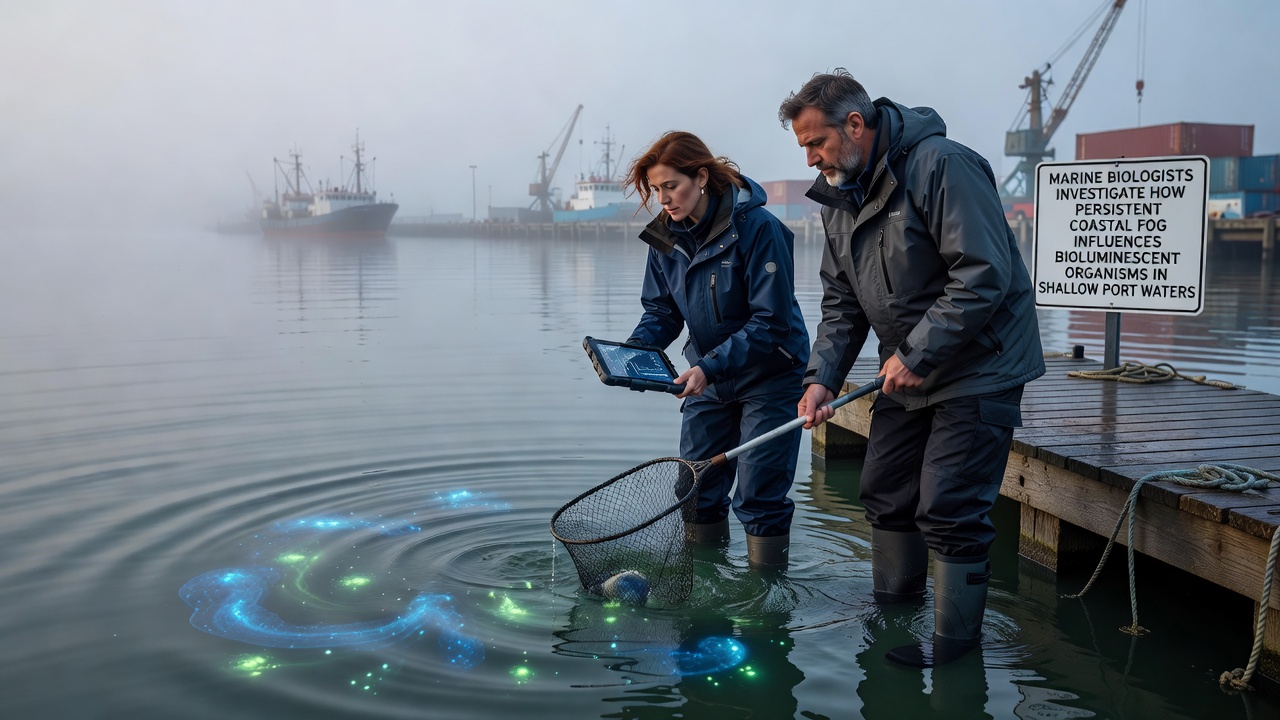
Coastal fog rolls into shallow port waters with regularity, and marine biologists have tracked its effects on bioluminescent organisms for years, noting shifts in light penetration, water chemistry, and organism behavior during extended periods of low visibility. Researchers from multiple institutions coordinate sampling campaigns that coincide with seasonal fog patterns, collecting data on dinoflagellates and other light-emitting plankton that dominate these environments. In October 2026 teams expanded monitoring across several North American and European ports after preliminary results showed measurable changes in bioluminescence intensity when fog persisted beyond forty-eight hours.
Background on Bioluminescent Species in Port Ecosystems
Shallow port waters host dense populations of dinoflagellates such as Noctiluca scintillans and certain copepods that produce light through chemical reactions involving luciferin and luciferase. These organisms respond to mechanical disturbance, nutrient levels, and ambient light, factors that fog alters by reducing solar radiation and increasing surface humidity. Data collected by port authorities and academic groups indicate that fog events can last several days in autumn and winter, creating conditions where bioluminescence becomes more visible at night because daytime light suppression allows organisms to conserve energy for nocturnal displays.
Port environments differ from open ocean sites because of higher nutrient inputs from runoff and vessel traffic, which support larger blooms. Studies conducted by the National Oceanic and Atmospheric Administration document seasonal spikes in bioluminescent activity that align with fog frequency in harbors along the Pacific and Atlantic coasts. Observers note that mechanical stress from wave action against docks and hulls triggers flashes, yet fog modifies the timing and duration of these responses by changing water column stability.
Methods Used in Recent Investigations
Biologists employ underwater cameras, fluorometers, and water samplers deployed from small vessels or fixed buoys to capture real-time bioluminescence readings during fog events. They pair these measurements with meteorological data from nearby stations that record fog density, wind speed, and temperature gradients. In one ongoing project, sensors placed at multiple depths record how reduced light affects vertical migration patterns of light-producing plankton, while water samples undergo laboratory analysis for chlorophyll concentration and nutrient profiles.
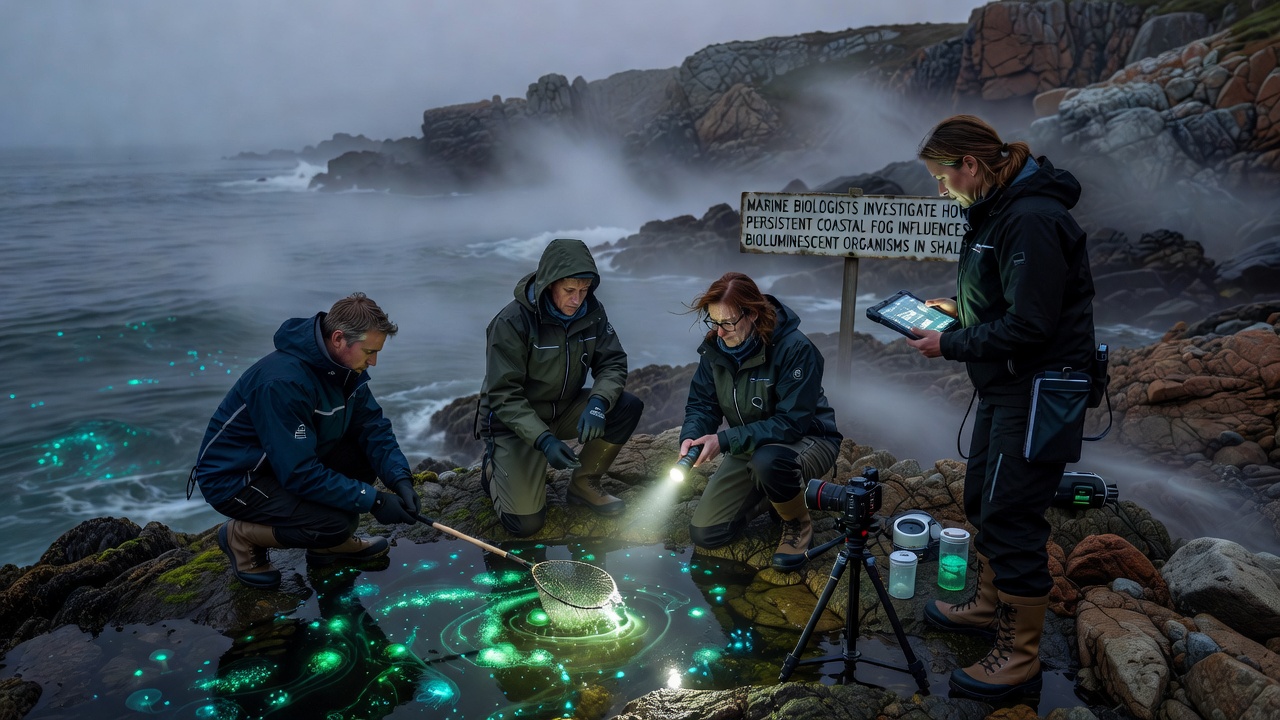
Teams also deploy autonomous underwater vehicles equipped with light sensors to map spatial variation across harbor basins. These vehicles operate safely in low visibility because onboard sonar avoids collisions with moored ships and channel markers. Data streams feed into models that correlate fog duration with changes in flash frequency and intensity, revealing patterns that single-day observations miss.
Observed Effects of Persistent Fog
Measurements show that prolonged fog reduces photosynthetically active radiation by up to seventy percent at the surface, prompting dinoflagellates to adjust their metabolic rates and sometimes increase luciferin production. Nutrient upwelling triggered by fog-related wind patterns can further stimulate blooms, leading to higher densities of glowing organisms near the surface. Researchers tracking these changes report that bioluminescence becomes detectable earlier in the evening when daytime light remains suppressed for consecutive days.
Port-specific conditions amplify these effects because shallow depths allow rapid mixing of surface and bottom waters during fog-driven temperature inversions. Australian research groups affiliated with CSIRO have recorded similar responses in temperate harbors, where fog events coincide with elevated counts of bioluminescent species. European Marine Board reports highlight comparable findings in Mediterranean and North Sea ports, confirming that the phenomenon occurs across different climate zones.
Implications for Port Operations and Ecosystems
Port managers monitor bioluminescence because intense blooms can signal water quality shifts that affect fish populations and shellfish beds. Shipping companies receive alerts when dense fog coincides with high organism counts, since reduced visibility plus glowing wakes can distract vessel crews or complicate navigation near narrow channels. Environmental agencies incorporate these data into assessments of how climate-driven fog changes may alter coastal food webs over time.
Long-term records maintained by harbor authorities reveal that years with above-average fog days often show extended bloom periods, although other variables such as nutrient loading and water temperature also contribute. Continued monitoring through 2026 and beyond will clarify whether these patterns strengthen or weaken under changing atmospheric conditions.
Conclusion
Investigations into fog and bioluminescence continue to generate detailed datasets that link atmospheric events with marine organism responses in shallow port waters. Coordinated efforts among government agencies, research institutions, and port operators provide the measurements needed to understand these interactions and support informed management decisions in coastal zones worldwide.